
Exploring the world of financing options for roofing and exterior projects opens up a realm of possibilities. From traditional methods to specialized programs, the landscape is vast and intriguing. Let's delve into the nuances of financing choices and how they can shape your renovation journey.
Financing Options for Roofing and Exterior Projects
When it comes to roofing and exterior projects, having various financing options available is crucial. These projects often require a significant investment, and not everyone can afford to pay for them upfront. By offering different financing options, contractors can make these projects more accessible to a wider range of clients.
Common Financing Options in the Construction Industry
- Personal Loans: Individuals can take out personal loans from banks or online lenders to fund their roofing or exterior projects.
- Home Equity Loans: Homeowners can use the equity in their homes to secure a loan for these types of projects.
- Credit Cards: Some homeowners choose to use credit cards to finance their roofing and exterior projects, although this option often comes with high-interest rates.
Benefits and Drawbacks of Financing Options for Roofing and Exterior Projects
One of the main benefits of financing options tailored for roofing and exterior projects is that they allow homeowners to complete these projects without having to deplete their savings. However, it's essential to consider the interest rates and repayment terms associated with these options, as they can add to the overall cost of the project.
Impact of Financing Options on Project Timelines and Costs
- Quick Approval: Certain financing options offer quick approval, allowing homeowners to start their projects sooner rather than later.
- Increased Costs: While financing options can make projects more accessible, they can also lead to increased costs due to interest payments over time.
Traditional Financing Methods
When it comes to financing roofing and exterior projects, traditional methods have been relied upon for years. These methods include bank loans, personal savings, and credit cards, each with its own application process and eligibility criteria.
Bank Loans
- Bank loans are a common way to finance larger roofing and exterior projects.
- Applicants need to have a good credit score and stable income to qualify for a bank loan.
- Interest rates for bank loans can vary based on the individual's creditworthiness and the current market rates.
Personal Savings
- Using personal savings is a straightforward way to finance smaller roofing and exterior projects.
- No application process is required, but it can deplete personal funds.
- No interest is paid on personal savings, making it a cost-effective option.
Credit Cards
- Credit cards can be used to finance roofing and exterior projects, especially for smaller expenses.
- Applicants must have a good credit score to qualify for a credit card with a sufficient limit.
- Interest rates on credit cards can be high if the balance is not paid off in full each month.
Comparison with Home Equity Loans or Lines of Credit
While traditional financing methods like bank loans, personal savings, and credit cards are widely used, newer alternatives such as home equity loans or lines of credit offer homeowners additional options. Home equity loans allow homeowners to borrow against the equity in their homes at a fixed interest rate, while home equity lines of credit provide a revolving line of credit with variable interest rates.
Real-Life Examples
John and Sarah financed their roof replacement project through a bank loan, which offered them a competitive interest rate based on their credit history. They were able to complete the project on time and within budget.
Michael used his personal savings to upgrade the exterior of his home, avoiding the need for interest payments and maintaining control over the project budget.
Laura opted to use a credit card with a promotional 0% interest rate to finance her new windows installation, allowing her to spread out the payments without incurring additional costs.
Specialized Financing Programs
When it comes to financing roofing and exterior projects, specialized financing programs can offer unique benefits tailored to these specific needs
Government-backed Financing Programs
Government-backed financing programs often offer incentives for energy-efficient upgrades, which can help homeowners save money in the long run. These programs may include tax credits, rebates, or low-interest loans to encourage investments in sustainable home improvements.
Key Features of Specialized Financing Programs
- Low-interest rates: Specialized financing programs typically offer lower interest rates compared to traditional loans, making them more affordable for homeowners.
- Flexible repayment options: These programs may provide flexible repayment terms to accommodate different financial situations.
- Quick approval process: Some specialized financing programs have a streamlined application process, allowing homeowners to access funds faster.
- Specialized expertise: Lenders offering specialized financing programs often have knowledge and experience in roofing and exterior projects, providing valuable guidance to homeowners.
Qualifying for Specialized Financing Programs
To qualify for specialized financing programs, homeowners may need to meet certain criteria such as having a good credit score, demonstrating the ability to repay the loan, and providing details about the planned home improvement project. Here are some tips to help homeowners take advantage of these programs:
- Research available programs: Explore different specialized financing options and choose the one that best fits your needs and financial situation.
- Prepare necessary documents: Gather all required documents, such as proof of income, credit history, and project estimates, to expedite the application process.
- Consult with a financial advisor: Seek advice from a financial professional to understand the terms and conditions of the specialized financing program and ensure it aligns with your financial goals.
- Stay informed: Keep up to date with any changes or updates to the specialized financing program to make informed decisions about your home improvement project.
Vendor Financing and Payment Plans
Vendor financing is a type of financing offered by suppliers or vendors to customers purchasing goods or services. In the context of roofing and exterior projects, vendor financing can provide customers with flexible payment options to fund their home improvement needs.
Types of Payment Plans
- Zero-Interest Financing: Some vendors offer zero-interest financing for a specified period, allowing customers to make payments without incurring interest charges.
- Deferred Payment Options: Vendors may also provide deferred payment plans where customers can delay payments until a later date, typically after the project is completed.
Reputable Vendors Offering Flexible Financing
- ABC Roofing Supplies: ABC Roofing Supplies offers zero-interest financing for up to 12 months for qualifying customers, making it easier to afford roofing materials and services.
- XYZ Exterior Solutions: XYZ Exterior Solutions provides deferred payment options, allowing customers to pay for their exterior projects once the work is finished and they are satisfied with the results.
Reviewing Terms and Conditions
Before committing to a project with vendor financing, it is crucial for customers to carefully review the terms and conditions of the financing agreement. This includes understanding the interest rates, repayment schedules, any penalties for late payments, and the total cost of financing over time.
By being informed about the details of the agreement, customers can make well-informed decisions regarding their home improvement projects.
Last Recap
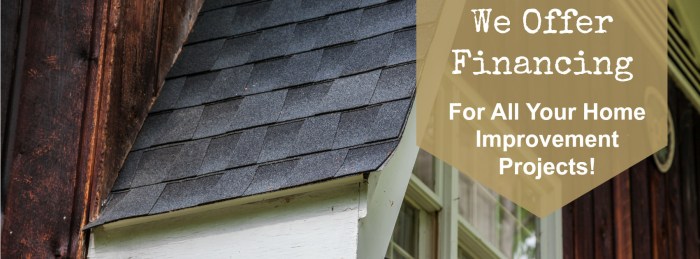
In conclusion, the realm of financing options for roofing and exterior projects is diverse and dynamic. By understanding the various choices available, homeowners can navigate their renovation projects with confidence and financial savvy. Here's to creating beautiful spaces with smart financing decisions!
Query Resolution
What are some common financing options used in the construction industry?
Common financing options in construction include bank loans, personal savings, credit cards, home equity loans, and lines of credit.
How can financing options impact project timelines?
Financing options can impact project timelines by influencing the availability of funds for different stages of the project, potentially speeding up or delaying completion.
What are some key features of specialized financing programs for roofing and exterior projects?
Specialized financing programs may offer incentives for energy-efficient upgrades, lower interest rates, or unique repayment structures tailored to these specific projects.