
Exploring the impact of green roofing trends on global construction, this introduction sets the stage for a fascinating discussion on the evolution of sustainable practices in the industry.
As we delve deeper into the world of green roofing, we uncover the ways in which this eco-friendly approach is revolutionizing modern construction practices.
Overview of Green Roofing Trends
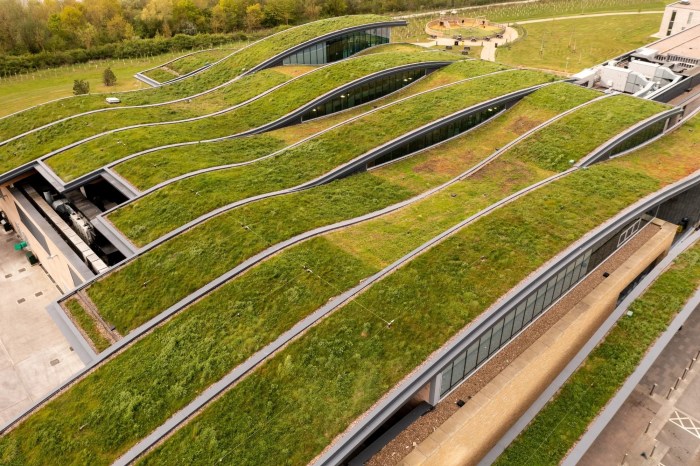
Green roofing is a sustainable construction practice that involves planting vegetation on rooftops to create eco-friendly and energy-efficient buildings. This innovative trend is gaining momentum in the construction industry worldwide.
Key Benefits of Green Roofs
- Reduction of Urban Heat Island Effect: Green roofs help mitigate the heat absorbed by traditional roofs, reducing the overall temperature in urban areas.
- Energy Efficiency: By providing natural insulation, green roofs can reduce the need for heating and cooling, leading to lower energy consumption.
- Stormwater Management: Green roofs absorb rainwater, reducing runoff and alleviating pressure on drainage systems during heavy rainfall.
- Improved Air Quality: Vegetation on green roofs helps filter pollutants and carbon dioxide from the air, promoting cleaner and healthier environments.
Environmental Impact of Green Roofing Solutions Globally
Green roofing solutions have a positive impact on the environment by promoting biodiversity, reducing greenhouse gas emissions, and improving overall air quality. As more buildings adopt green roofs, the potential to combat climate change and create sustainable urban spaces increases significantly.
Types of Green Roofing Systems
Green roofing systems come in different types, each serving a specific purpose in sustainable construction practices. Two common types are extensive and intensive green roof systems.
Extensive Green Roof Systems
Extensive green roof systems are lightweight and have shallow soil depths, typically ranging from 2 to 6 inches. These systems require minimal maintenance and are ideal for covering large roof areas with low slopes. They are commonly planted with sedum, grasses, or other low-growing vegetation that can withstand harsh weather conditions and require little water.
Intensive Green Roof Systems
Intensive green roof systems have deeper soil depths, ranging from 6 inches to several feet, allowing for a wider variety of plants and landscaping features such as trees, shrubs, and even small gardens. These systems are heavier and require more structural support, as well as regular maintenance to upkeep the diverse vegetation.
Intensive green roofs can provide additional benefits such as improved insulation, increased biodiversity, and recreational spaces for building occupants.Examples of successful green roof installations around the world include the California Academy of Sciences in San Francisco, which features a 2.5-acre living roof with a variety of plant species native to California.
Another notable example is the Marina Bay Sands Hotel in Singapore, known for its expansive rooftop gardens that help reduce heat gain and provide a green oasis in the urban environment.
Technology and Innovation in Green Roofing
Green roofing technology has been rapidly evolving to meet the growing demand for sustainable construction practices. Innovations in green roofing materials are not only enhancing the performance of green roofs but also driving sustainability in the construction industry.
Latest Technological Advancements in Green Roofing Materials
- Introduction of lightweight and durable materials such as recycled rubber, plastic, and composite materials.
- Integration of solar panels and rainwater harvesting systems within green roof designs to maximize energy efficiency and water conservation.
- Development of smart green roof systems with sensors and automated irrigation systems for optimal plant health and water usage.
Innovation Driving Sustainability in Green Roof Construction
- Advancements in modular green roof systems that allow for easy installation, maintenance, and customization based on building requirements.
- Use of bio-based materials and green roof membranes to reduce carbon footprint and enhance the overall sustainability of green roofs.
- Implementation of cool roof technologies that reflect sunlight and reduce heat absorption, leading to energy savings and improved urban microclimate.
Emerging Trends in Green Roof Design and Implementation
- Growing popularity of urban agriculture on green roofs, enabling food production in urban areas and promoting local food sustainability.
- Incorporation of biodiversity-friendly green roof designs to support pollinators, birds, and other wildlife in urban environments.
- Focus on multi-functional green roofs that not only provide environmental benefits but also offer recreational spaces, urban farming opportunities, and stormwater management solutions.
Global Adoption and Regulations
Green roofing practices have been gaining momentum on a global scale, with more countries embracing the benefits of eco-friendly construction solutions. As environmental awareness continues to grow, the adoption rates of green roofs are steadily increasing worldwide. Alongside this trend, regulations and policies are playing a crucial role in shaping the integration of green roofs into urban landscapes.
Current Global Adoption Rates
- According to a report by the Green Roofs for Healthy Cities organization, the global green roof market is expected to reach $5.5 billion by 2026.
- Countries like Germany, Canada, and Australia are leading the way in green roof adoption, with extensive green roof networks in major cities.
- In Europe, green roofs are becoming a common feature in urban planning, with cities like Copenhagen and Zurich implementing green roof mandates for new buildings.
Role of Regulations and Policies
- Regulations and policies play a significant role in promoting the implementation of green roofs by offering incentives, tax credits, and rebates to encourage adoption.
- In the United States, cities like Chicago and San Francisco have introduced green roof ordinances that require new buildings to include green roof systems or solar panels.
- Government initiatives in Singapore have led to the widespread adoption of green roofs, with incentives provided for property owners to install green roofs on their buildings.
Countries Leading the Way
- Germany: With over 100 years of green roof history, Germany is a pioneer in green roof technology and implementation, with over 14% of flat roofs in the country being green roofs.
- Canada: Cities like Toronto have been at the forefront of green roof initiatives, with a Green Roof Bylaw mandating green roofs or solar panels on new developments.
- Australia: Australian cities like Melbourne have embraced green roofs as a way to combat urban heat island effects and improve air quality in densely populated areas.
End of Discussion
In conclusion, the discussion on how green roofing trends are shaping global construction highlights a shift towards environmentally-conscious building solutions that are paving the way for a greener future.
Essential FAQs
What are the main benefits of incorporating green roofs?
Green roofs provide natural insulation, reduce energy costs, improve air quality, and enhance stormwater management.
What are the different types of green roofing systems commonly used?
Common types include extensive green roofs (lightweight, low maintenance) and intensive green roofs (lush vegetation, higher maintenance).
How are regulations and policies influencing the integration of green roofs globally?
Many countries are incentivizing or mandating green roof installations to promote sustainability and combat urban heat island effects.